Insurance brokers
Support clients with richer operational insight and stronger renewal discussions.

For insurers & brokers
The future of underwriting will be built on better operational understanding.
RiskTech helps insurers, brokers and their clients strengthen underwriting conversations through trusted operational evidence and Continuous Risk Intelligence. Understanding how risk is actively managed today provides richer context than historical outcomes alone.
A richer picture of operational risk
Insurance has always relied on historical claims. Operational behaviour provides additional context: it shows how critical controls are being managed today, helps demonstrate operational discipline, and creates stronger conversations between insurers, brokers and customers.
The missing layer
Most underwriting already considers building construction, fire protection, occupancy, claims history and risk engineering. What is often difficult to demonstrate consistently is how operational controls are managed every day.
RiskTech makes that operational layer visible through verified evidence and operational intelligence.
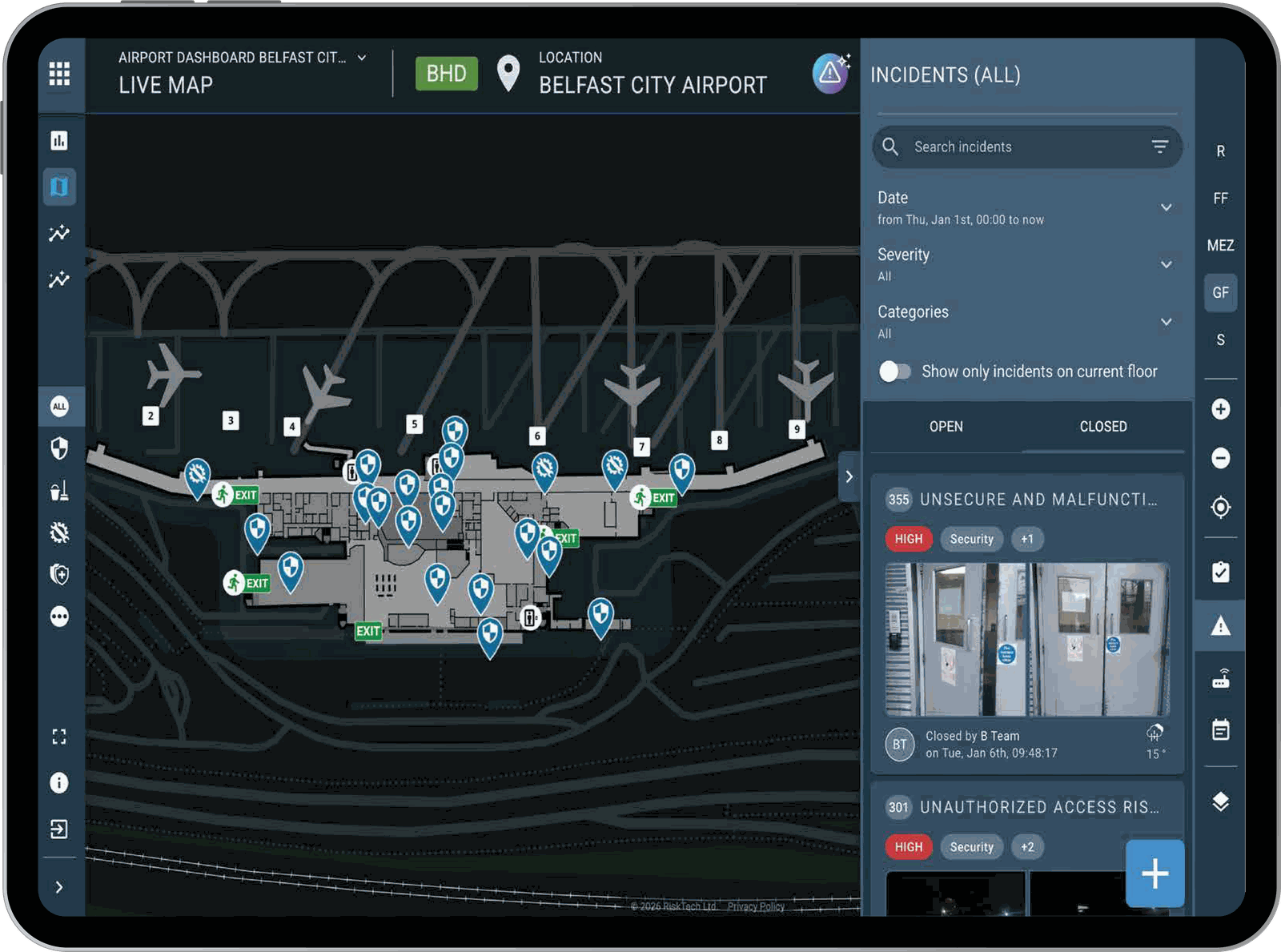
Know. Don’t Assume.
Better information. Not more information.
Operational leaders don’t need another dashboard. Risk engineers don’t need another spreadsheet. Underwriters don’t need more documents. They need better understanding. RiskTech transforms operational activity into trusted evidence that supports more informed conversations.
How partners use RiskTech
Support clients with richer operational insight and stronger renewal discussions.
Gain additional visibility into how operational controls are managed over time.
Support engineering recommendations with continuous operational verification.
Underwriting data centre risk? See how RiskTech verifies the operational controls that uptime and business interruption depend on. Operational intelligence for data centres →
Proven in practice
At Battersea Power Station, brokers at Lockton reviewed twelve months of verified RiskTech operational data on site and took evidence, not assumptions, to the insurance market: a 28% premium reduction on the primary layer (~£200,000 per annum) plus additional savings on excess layers, delivering an overall 35% saving on the Public Liability tower, while maintaining previous policy wording.
Reference: Jordan Moss, Senior Vice President, Lockton
Know. Don’t Assume.
Become a RiskTech Partner